
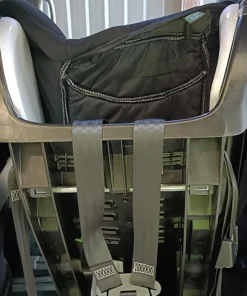
Car Seat Installation Mistakes made by Parents and Carers
Common car seat installation mistakes we see in Melbourne — and how to avoid them.
Why professional fitting matters
Child restraints are the safest way for babies and children to travel when they are chosen and used correctly. Many parents fit seats themselves and still end up with common installation or use errors.
Research and roadside checks regularly find high rates of incorrect use. A poorly fitted or poorly adjusted seat can greatly reduce protection in a crash. “Legal enough” is not the same as “fitted well.”

Your child’s safety is the most important cargo you will ever carry. A seat that is easy to use correctly every day is as important as the brand on the label.
An ACRI accredited mobile fitter can install the restraint in your vehicle, check the angle and harness path, and show you how to use it the same way each trip.
Common baby car seat installation mistakes
These are among the most frequent errors we see — and how to avoid them.

Loose harness
The harness must be snug. You should not be able to pinch a fold of slack at the shoulder.
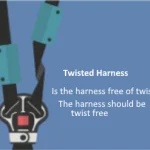
Twisted harness straps
Twisted straps reduce effectiveness in a crash. Fully loosen, untwist, then re-tighten when you take the child out and put them back in.
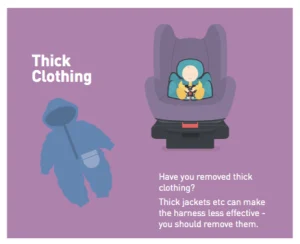
Bulky clothing under the harness
Thick jackets create false slack. Buckle the harness against clothing layers the child wears under a coat, then use a blanket over the harness if needed.
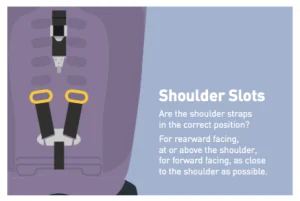
Incorrect harness height
Rear-facing: straps at or below the shoulders. Forward-facing: at or above the shoulders. Recheck as your child grows.
Wrong recline angle
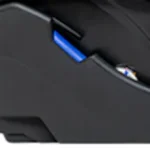
Too upright can let a newborn’s head fall forward; too flat can reduce crash performance. Use the seat’s level indicator and manual.
Ignoring shoulder height markers
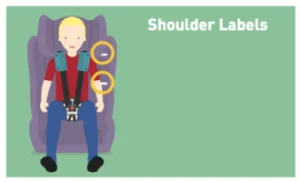
Markers show when a child has outgrown a mode of that seat. Follow the labels and instructions for your model — not another child’s timeline.
How to check the correct recline angle
Getting the recline right matters for newborns and rear-facing travel. Too upright can cause the head to flop forward; too flat can reduce protection.
- 1. Use the built-in level indicator (bubble or line) in the correct zone.
- 2. The baby’s head should rest against the back of the seat, not tip forward onto the chest.
- 3. Many newborn setups sit roughly in a reclined range described in the manual (often around 30–45° from vertical — follow your seat).
- 4. Use the foot, load leg or approved wedge only as the manufacturer allows.
Phone tip
Some parents use a compass or angle app on the seat shell as a rough check. The seat’s own indicator and manual always take priority.
Example: level indicator on a capsule
Common booster seat mistakes
Moving to a booster too early
Children generally need a harnessed seat until they meet the age/size rules for a booster. Don’t rush the step down.
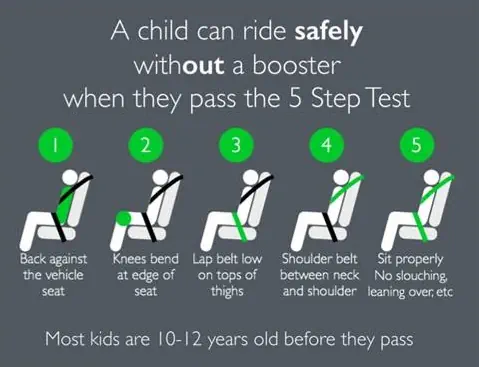
Follow the 5 Step Booster seat Test
Lap belt on the stomach
The lap belt must sit low across the hips, not up on the soft abdomen.
Shoulder belt behind the back or under the arm
The sash should cross the mid-shoulder and chest. Behind the back or under the arm is unsafe.
Tether / anchor not used when required
Many high-back boosters still need the top tether attached. Check the manual — exceptions exist for some lightweight designs.
Missing sash guide or wrong headrest height
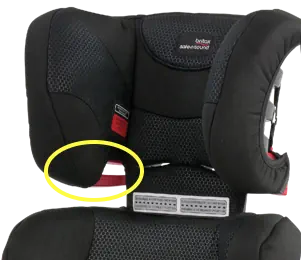
Use the booster’s belt guides and set the headrest so the sash sits correctly on the shoulder.
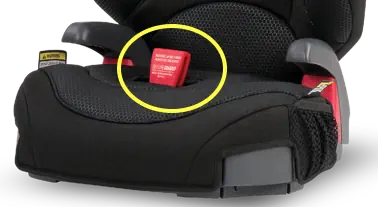
Anti-submarine features ignored
Where the seat includes a crotch buckle, armrests or design that limits sliding under the belt, use it as instructed.
Australian car seat laws vs best practice
Victoria (and other states) set legal minimums. Best practice often means staying in a more protective restraint longer.
| Stage | Legal minimum (guide) | Best practice |
|---|---|---|
| Birth – ~6 months | Rear-facing restraint | Rear-facing capsule or seat |
| ~6 months – 4 years | Rear- or forward-facing with harness (as allowed) | Stay rear-facing as long as the seat allows |
| 4 – 7 years | Harnessed seat or approved booster with lap-sash belt | Prefer harness longer; booster only when ready |
| 7+ years | Adult belt when rules allow | Booster until ~145 cm and the 5-step test is passed |
Always confirm current Victorian road rules and your seat’s manual. Rules and standards change.
Professional car seat fitting with BebaBaby
ACRI accredited
Accredited fitting since 2012, with training updated through Kidsafe.
Mobile service
We come to your home or office across Bayside and South East Melbourne.
Demonstration included
We fit the seat and show you how to use the harness and adjust it as your child grows.
All restraint types
Capsules, convertibles, boosters and extended-harness seats — Isofix or seat belt as appropriate.
Car Seat Installation Mistakes – FAQ
What are the most common car seat installation mistakes? +
How tight should the harness be? +
What recline angle should a capsule have? +
Do I need the top tether? +
When can my child leave a booster? +
Should I get a professional fitting? +
Don’t leave installation to chance
ACRI accredited mobile fitting across Bayside and South East Melbourne.
This post is general safety information only. It is not a substitute for your seat’s instruction manual, current Australian Road Rules in your state or territory, or advice from a certified child restraint fitting technician for your child, seat and vehicle.